How-To Guides · Cars
How to Check Your Car's Oil (and Add More)
Checking your oil takes about two minutes, and it's one of the easiest ways to protect your engine. AAA suggests checking it once a month. Here's how.
1. Step 1: Park And Let It Cool

Park on level, flat ground, so the reading is accurate. Turn off the engine, and give it some time to cool down, so the oil can drain back to the bottom of the engine.
2. Step 2: Find The Dipstick
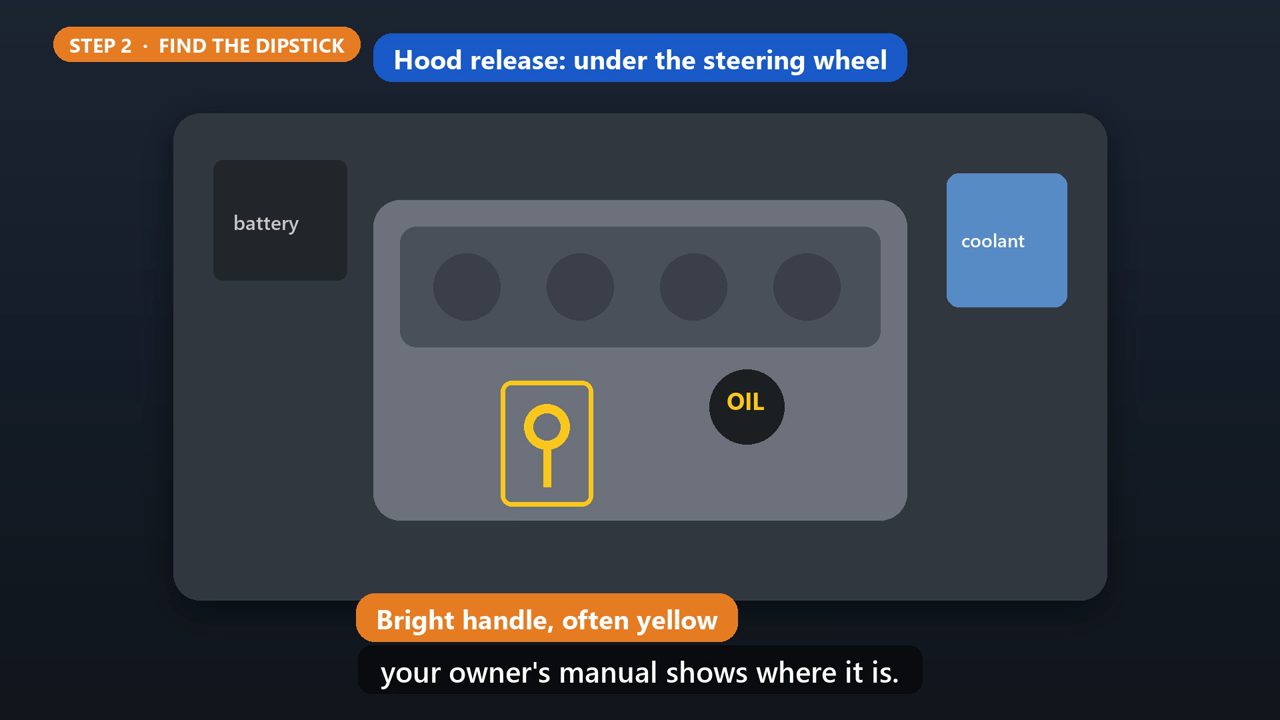
Pop the hood. The hood release is usually under the steering wheel, near your knees. The dipstick has a brightly colored handle, often yellow. If you can't find it, your owner's manual shows where it is.
3. Step 3: Pull, Wipe, And Dip Again

Pull the dipstick all the way out, and wipe it clean with a paper towel or rag. Push it back in all the way, then pull it out again. This second pull gives you the real reading.
4. Step 4: Read The Marks
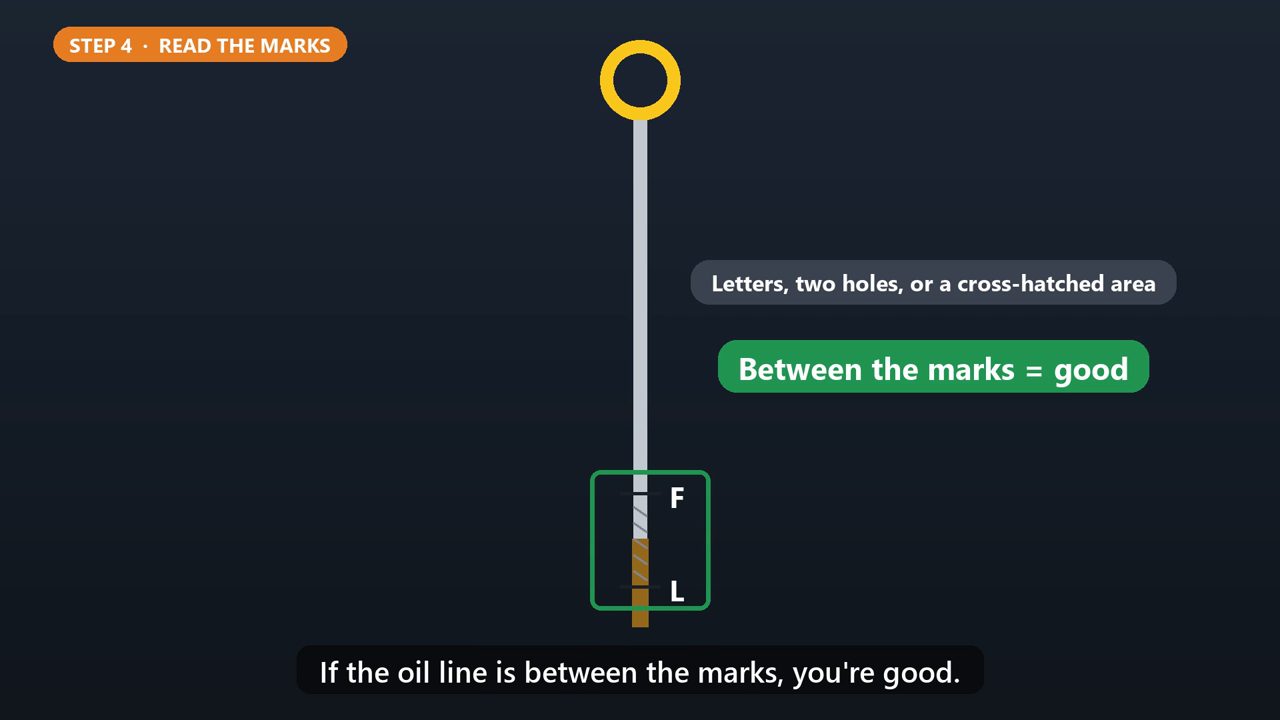
Near the tip, you'll see two marks. Low and full. Sometimes they're letters, sometimes two holes, or a cross-hatched area. If the oil line is between the marks, you're good.
5. Step 5: Add Oil If It'S Low
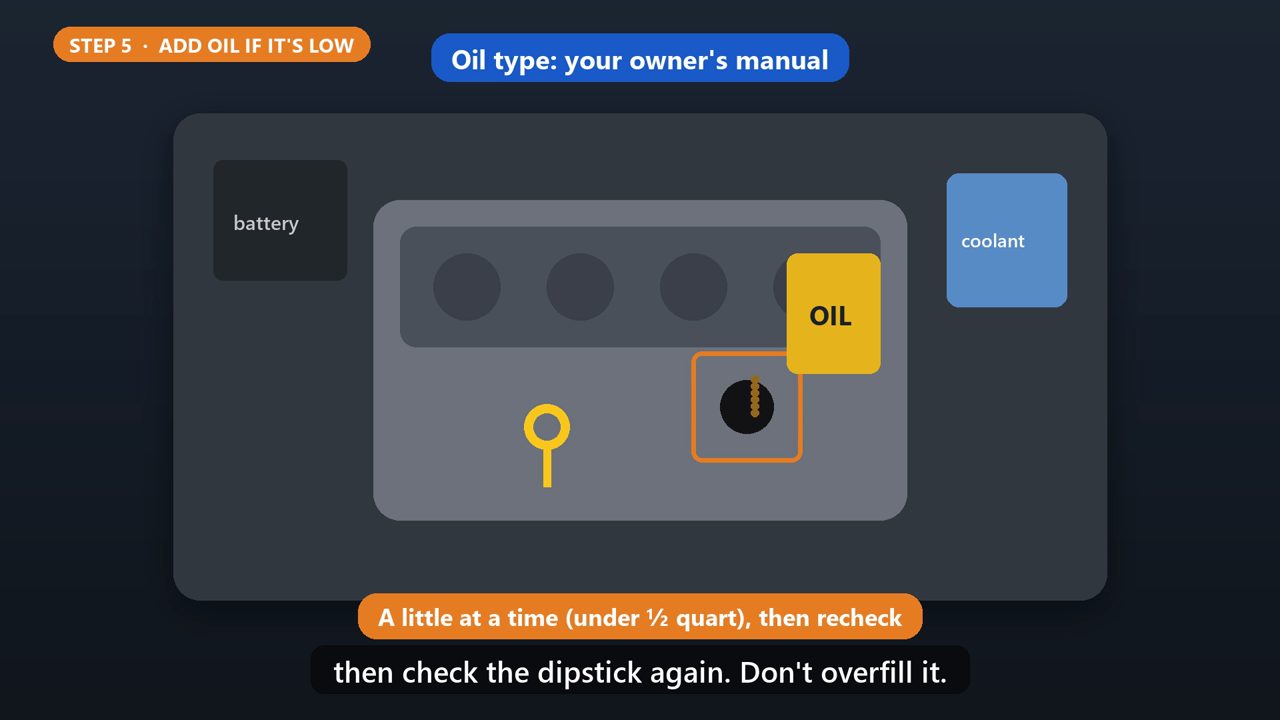
If it's at or below the low mark, add oil. Unscrew the oil cap on top of the engine. It usually shows a picture of an oil can. Use the oil type listed in your owner's manual. Add a little at a time, less than half a quart, wait a minute, then check the dipstick again. Don't overfill it.
6. Keep An Eye On It

If your oil keeps getting low, you might have a leak. Look for dark spots under where you park, and have a mechanic take a look.
Tools that make this easier
Simple Google Sheets + Excel tools from WiscHaven. Buy once, no subscription.




Sources
Checked against the official sources above. Steps can change as apps update - tell us if something looks different: wischavenindustries@gmail.com